
10 Yard Dumpster · Bloomington, IL
10 Yard Dumpster Rental in Bloomington, IL
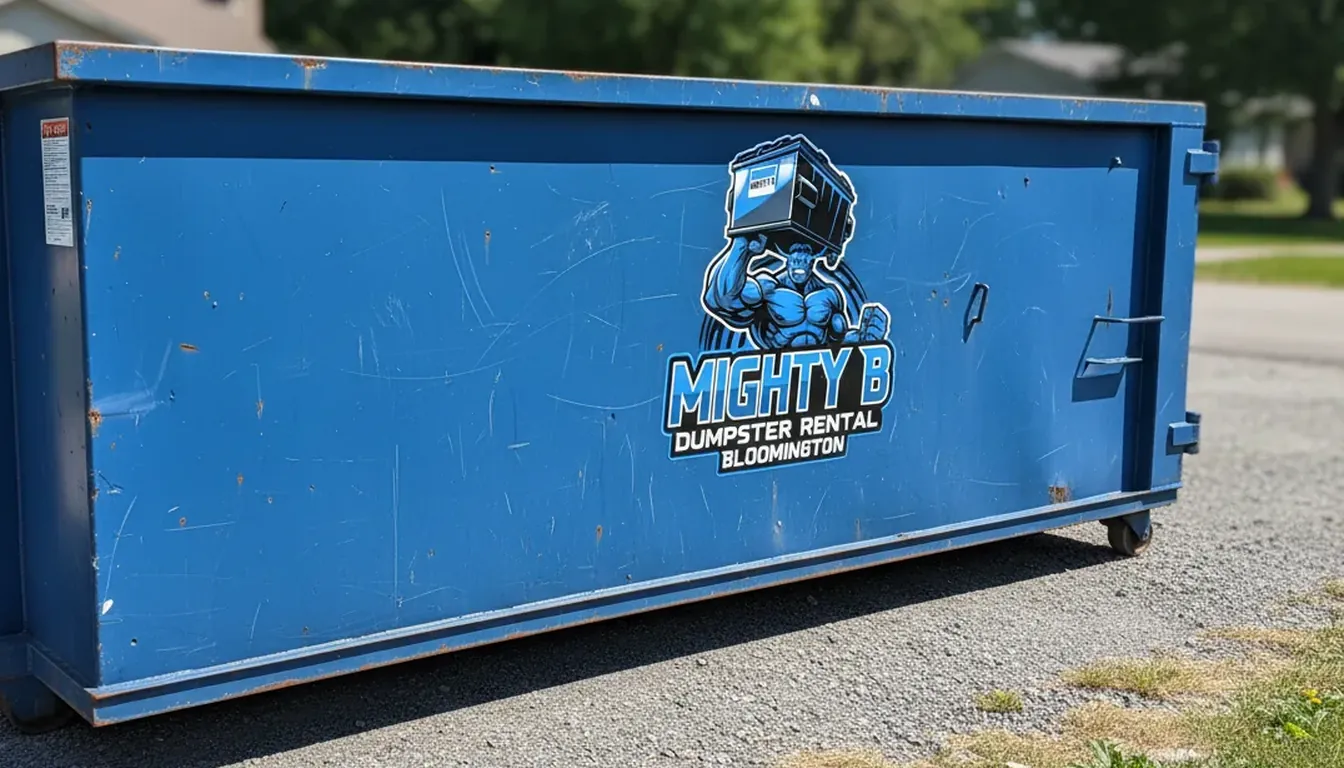
Twelve feet long, eight wide, walls only three and a half feet high. It looks small because it is, but nothing we run carries a denser load. Concrete, brick, dirt, plaster, flooded basements.
- Same-day & next-day delivery
- Flat-rate, all-in pricing
- Driveway protection included
- Same-Day DeliveryCall before noon and we can usually be there today.
- Flat-Rate PricingDelivery, pickup, disposal and tax quoted up front.
- Licensed & InsuredFully insured and licensed to haul in Illinois.
- Locally Owned2013-founded, family run, based right here in Bloomington.
At a glance
10 Yard Dumpster specifications
- Dimensions12 ft × 8 ft × 3.5 ft
- Capacity2–3 pickup loads
- Weight included1–2 tons
- Rental period7 days standard, extend any time
- DeliverySame-day or next-day across McLean County
- PricingOne flat rate — delivery, pickup, disposal & tax
The 10 yard is the container people underestimate. It measures roughly 12 feet long by 8 feet wide with walls about 3.5 feet high, and next to a 30 on the same driveway it looks like a toolbox. Then you watch a homeowner fill it with broken driveway slab and realise the truck is leaving at its legal limit with two feet of daylight still showing above the debris.
That is the whole point of this size. Volume and weight are two separate limits, and they almost never run out at the same time. Light bulky debris — cardboard, sofas, cabinets, siding, ceiling tile — runs out of space first, which is why those jobs go in big boxes. Dense debris runs out of weight first. Concrete, brick, block, tile, dirt, sod, asphalt shingles, plaster-and-lath and anything that has been sitting in standing water hits the tonnage ceiling while the box still looks half empty. Put that material in a 30 yard and you have rented a lot of empty steel you are not allowed to fill.
The 10 comes with 1–2 tons included, and on a genuinely heavy load we will usually mark a fill line for you and ask you to stop there. That is not us being difficult. A roll-off has to leave level with the top rail and inside axle weight limits, and a container that is over the line legally cannot be transported. Better to know the line before you start than to be unloading brick out of a full box on a Tuesday morning.
The other thing it has going for it is footprint. It needs about 30 feet of run to set down and pick up, against roughly 60 feet for the bigger boxes. On the tight, tree-lined drives west and south of downtown Bloomington that difference decides whether you get a container at all. If you are not sure which way to go, the size comparison page lays all five side by side.
Right job, right box
What this size is built for
Ideal projects
- Broken concrete driveway or sidewalk removal
- Brick, block and stone from a chimney or garden wall
- Dirt, sod and clay from a small excavation
- Flooded basement cleanout after a sump failure
- One or two rooms of plaster-and-lath in a pre-1940 west-side home
- Small single-layer roof tear-off or shed roof
- Bathroom gut with tile, cast iron and backer board
- Tight downtown-adjacent drives where nothing bigger fits
Pick a different size if…
- Whole-home or estate cleanouts - you will fill it twice over, start at a 20 yard
- Roof tear-offs above roughly 10 squares - a 20 yard handles the volume and the tonnage together
- Bulky light junk like sofas, mattresses and cabinets - you cap on space at half the weight, use a 15 yard
- Deck teardowns and long framing lumber - 12 feet of floor is tight, a 20 yard swallows it
- Whole-house siding tear-off - huge volume, almost no weight, that is a 30 yard job
Not sure? Call (309) 503-0748 and describe what you are looking at. We would rather sell you a smaller container than have you pay for space you do not use.
Capacity in real terms
How much actually fits
| What you're loading | How it fits in a 10 yard dumpster |
|---|---|
| Broken concrete slab | Roughly 250-300 sq ft of 4-inch slab takes it to the fill line - stop at the mark, not the rail |
| Asphalt shingles | About 8-10 squares of single-layer three-tab, spread flat end to end rather than piled |
| Plaster-and-lath | One or two rooms stripped to the studs in an older west-side house - it caps on weight, not space |
| Fill dirt and sod | Around 4-5 cubic yards of clay soil, which will look like a half-empty box on a full ticket |
| Wet basement contents | One flooded basement of carpet, pad, boxes and lower drywall - soaked material runs double its dry weight |
| Salvage brick | Roughly one and a half to two pallets, stacked low and level across the floor |
Why the smallest container carries the heaviest loads
Every roll-off has two ceilings. One is the box — ten cubic yards of air, in this case. The other is the axle weight the truck can legally carry down Washington Street. Which ceiling you hit first depends entirely on what you are throwing in.
Run some rough numbers. A cubic yard of loose household junk might weigh 150–200 pounds. A cubic yard of broken concrete weighs somewhere north of a ton on its own. A cubic yard of wet clay soil is not far behind. Asphalt shingles land in the middle but still stack up fast — a single square of three-tab is around 230–250 pounds before you add the felt and the old flashing.
So the 10 yard is not the "small job" container so much as the dense material container. It is sized so that a full box of heavy debris lands inside what a truck can actually haul, instead of tempting you to keep filling a bigger one.
The fill-line habit
On concrete, brick, dirt and tile we will point out roughly where to stop before we pull off your driveway. Load from the front wall back, keep it spread flat rather than piled in the middle, and check it as you go. Anything you cannot see — a base of wet dirt under a layer of dry rubble — is where people get surprised.
If you have a mixed pile with a heavy half and a light half, split it. Clean masonry in the 10, everything else in a second box. That is normally cheaper than one oversized container that gets weighed on the scale anyway. Our concrete and heavy debris service is built around exactly that split.
Clean concrete, brick and dirt: keeping the load separated
Clean masonry is worth handling on its own. Broken concrete with no rebar mess, no plastic, no wood and no trash mixed in has somewhere useful to go rather than straight into a landfill cell, and keeping a load clean is a genuinely different job from filling a mixed can.
What "clean" means in practice: concrete, brick, block, stone, and unglazed tile. Not the plastic sheeting the slab was poured over. Not the 2x4 forms. Not the bag the mortar came in, not the pallet the pavers arrived on, and definitely not the half tin of driveway sealer sitting in the garage. One contaminated corner and the whole load gets treated as mixed waste.
Loading order that actually helps
- Break slab into pieces two people can lift — anything bigger has to be craned back out if it lands wrong.
- Lay the first course flat across the floor of the container rather than dumping in one corner. An unbalanced box is harder to hoist and can shift on the way up.
- Keep dirt and sod in a separate load from concrete where you can. Central Illinois clay holds water, and a dry-looking pile can be carrying a surprising amount of it after a wet week.
- Cover or tarp between sessions in winter. Snow and rain land in an open container and every bit of that goes across the scale as your weight.
Excavation and grading work brings its own step before you start: if you are digging at all, get utilities located first through JULIE, the Illinois one-call service. That call is free and it is a lot less painful than the alternative.
The flooded-basement container
Bloomington sits on flat prairie ground with heavy clay under it, and heavy clay does not drain. Sump pump fails, a storm sewer backs up during a summer downpour, a foundation crack lets go in the spring thaw — and a finished basement turns into a demolition job overnight. This is the single most common reason we drop a 10 yard on a residential drive.
People consistently guess this one wrong, and always in the same direction. They look at a basement full of soft furnishings and think "that is bulky, I need a big box." Then they start carrying it up the stairs. Carpet that weighed 60 pounds dry comes up at three times that. The pad underneath acts like a sponge. Drywall wicks water a foot or more above the flood line and comes off the studs in heavy, saturated chunks. Cardboard boxes of stored paperwork are the worst of the lot — a soaked banker's box is a two-person lift.
What actually goes in
Carpet and pad, lower drywall and insulation, ruined furniture, particle-board shelving, soaked boxes, warped laminate flooring. What does not go in: anything with refrigerant in it, so a basement chest freezer needs professional recovery first; electronics, which are banned from Illinois landfills outright; and any standing liquid, paint or solvent.
Work in one direction, cut drywall at a clean line above the damage, and get material out the same day if you can — it only gets heavier as it sits. We have a fuller walkthrough in our flooded basement cleanout guide, including the order of operations that keeps you from carrying the same load twice.
Fitting a 10 yard on an older Bloomington driveway
Access is the reason a lot of west-side and south-side customers end up in this size regardless of the debris. The truck does not lower the container straight down; it winches it off the back on rails, so it needs a straight run to work in. A 10 yard needs roughly 30 feet of approach. The larger boxes want closer to 60. On a 1920s bungalow with a single-width drive, a mature silver maple over the pavement and a service drop crossing the yard, 30 feet is the difference between a delivery and a phone call explaining why we cannot make it work.
The other constraint is overhead. The hoist arm needs around 23 feet of vertical clearance to tip the box off and set it back on. Low branches, phone and cable lines strung across the drive, carport roofs and garage overhangs all count. Walk it before we come out and look up, not just along.
Worth checking before delivery day
- Move cars, trailers and basketball hoops — we need the whole run, not just the landing spot.
- Note where the driveway is cracked or where an old apron has settled. We put protection boards under every residential drop, but it helps to know the weak spots.
- In March and April, keep the container off the lawn. Saturated prairie ground will not hold a loaded truck and you will be looking at ruts until June.
- On a hot July afternoon, asphalt softens. Morning deliveries are better for blacktop drives.
If a container genuinely will not fit, tell us what you are working with and we will talk through the alternatives — street placement, a neighbour's drive, or a smaller staged approach. Call (309) 503-0748 or use the contact page and describe the driveway; we would rather sort it out beforehand than have a truck sitting on your street.
Side by side
Compare with the other sizes
| Size | Dimensions (L × W × H) | Holds About | Weight Allowance | Best For |
|---|---|---|---|---|
| 10 Yard Dumpster | 12 ft × 8 ft × 3.5 ft | 2–3 pickup loads | 1–2 tons | Small cleanouts, single rooms, concrete |
| 15 Yard Dumpster | 16 ft × 8 ft × 4 ft | 4–5 pickup loads | 2–3 tons | Garage clearouts, small remodels, decks |
| 20 Yard Dumpster | 22 ft × 8 ft × 4.5 ft | 6–8 pickup loads | 3–4 tons | Whole-home cleanouts, roof tear-offs, kitchens |
| 30 Yard Dumpster | 22 ft × 8 ft × 6 ft | 9–12 pickup loads | 4–5 tons | Large remodels, construction, estate clearances |
| 40 Yard Dumpster | 22 ft × 8 ft × 8 ft | 14–16 pickup loads | 5–6 tons | Commercial jobs, bulky light debris, big builds |
Book a 10 yard dumpster in Bloomington
Call (309) 503-0748 for a flat rate and a delivery slot — often the same day.
Answers
10 Yard Dumpster — frequently asked questions
How much room do I need for a 10 yard dumpster?
Plan on about 30 feet of straight approach so the truck can roll the container off the rails, plus roughly 23 feet of clear height overhead for the hoist arm. The box itself only takes up 12 by 8 feet. That short run is exactly why the 10 works on narrow older Bloomington drives where a 30 yard simply cannot be delivered. Move vehicles well clear before we arrive.
Why is the smallest dumpster the one you recommend for concrete?
Because weight, not space, is the limit on dense debris. A cubic yard of broken concrete weighs well over a ton, so a truck reaches its legal axle weight long before the box is full. Sizing down means the container you rent is the container you can actually fill. A larger box with masonry in it is mostly rented air you are not permitted to use.
What does 1 to 2 tons included actually mean?
It is the disposal weight built into your flat rate. Load a 10 yard with household junk and you will never come close to it. Load it with concrete, tile, wet carpet or plaster and you can reach it with the box half full. We will tell you where the fill line sits for your material before we leave, so there are no surprises when the load crosses the scale.
Can I put dirt and concrete in the same load?
You can, but it is usually better not to. Clean masonry with no wood, plastic or trash in it has separate handling options, and mixing dirt through it turns the whole load into general waste. Keeping them apart also makes the weight easier to predict, since Central Illinois clay holds a lot of water and a damp pile weighs far more than it looks.
Will a 10 yard handle my basement after it flooded?
For most single-basement cleanouts, yes. Saturated carpet, pad, lower drywall, insulation and soaked boxes are heavy rather than bulky, so you hit the weight allowance before you run out of floor. Keep appliances with refrigerant and all electronics out of the load, since those need separate handling under Illinois rules. If the basement is large or fully finished, step up to a 15.
Compare
Other container sizes
Services
Popular services using this size
Verified sources
Local & Official Resources
We are a private hauler, not a government agency. For rules, fees and hours, always go straight to the source:
- City of Bloomington — permits, right-of-way, refuse & recycling for Bloomington addresses
- Town of Normal — the Town of Normal runs its own separate programmes and permits
- McLean County — county services for unincorporated McLean County
- Ecology Action Center — McLean County recycling and household hazardous waste information hub
- Illinois EPA waste management — Illinois landfill bans and waste regulation
- JULIE / Illinois 811 — call 811 before any digging or footing work