
15 Yard Dumpster · Bloomington, IL
15 Yard Dumpster Rental in Bloomington, IL
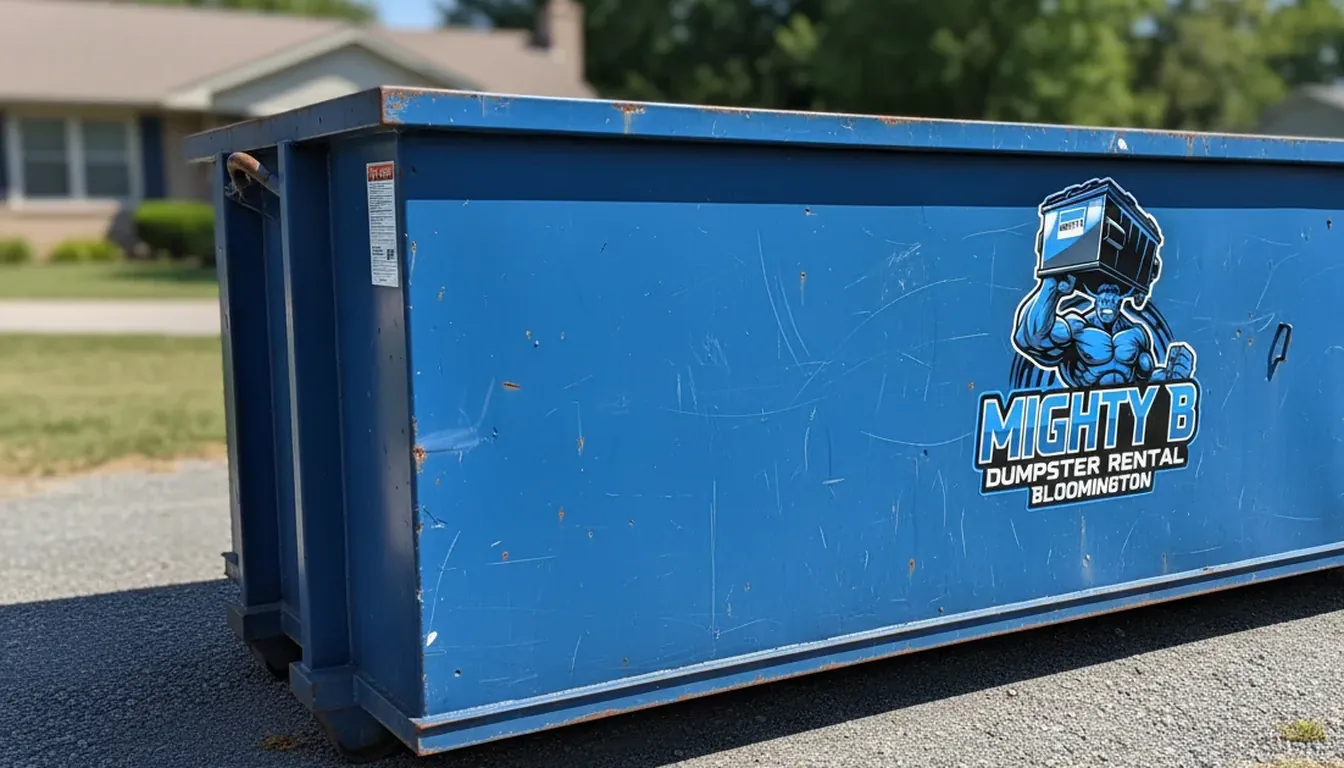
Sixteen feet long, eight wide, four-foot walls, two to three tons included. The size most people skip straight past on their way from a 10 to a 20, and the one that is often right.
- Same-day & next-day delivery
- Flat-rate, all-in pricing
- Driveway protection included
- Same-Day DeliveryCall before noon and we can usually be there today.
- Flat-Rate PricingDelivery, pickup, disposal and tax quoted up front.
- Licensed & InsuredFully insured and licensed to haul in Illinois.
- Locally Owned2013-founded, family run, based right here in Bloomington.
At a glance
15 Yard Dumpster specifications
- Dimensions16 ft × 8 ft × 4 ft
- Capacity4–5 pickup loads
- Weight included2–3 tons
- Rental period7 days standard, extend any time
- DeliverySame-day or next-day across McLean County
- PricingOne flat rate — delivery, pickup, disposal & tax
The 15 yard has an image problem. People call, describe a garage and a basement, and then ask for a 20 "just to be safe" without ever asking what the 15 would have done. In a good share of those jobs the 15 finishes the work with room left, on a shorter footprint, and it goes on driveways where the bigger box is a tight squeeze.
Physically it sits at 16 feet long, 8 feet wide and about 4 feet high, holding roughly four to five pickup loads with 2–3 tons included. That extra four feet of length over a 10 yard matters more than the number suggests, because most of what fills a residential container is long rather than tall — deck boards, shelving units, closet rods, bed frames, sections of counter, rolled carpet. A 12-foot floor makes you cut things down. A 16-foot floor takes a lot of them whole.
Where the 15 earns its keep is the middle-density job: a detached garage stacked to the rafters, a basement that has absorbed thirty years of storage, a single-layer roof on a ranch, a deck coming off the back of a house on the east side. None of that is dense enough to hit the tonnage cap the way concrete does, and none of it is bulky enough to need the volume of a 30.
Where it is the wrong answer is at both ends. Clean masonry, dirt or a plaster-and-lath gut belongs in a 10 yard, because those loads cap on weight and the extra volume does nothing for you. A whole-house clearout or a multi-trade remodel belongs in a 20 yard or bigger, because you will be calling for a swap by day two. Our size selection guide walks through the judgment call in more detail.
One last thing about the 15 that customers notice after the fact: it takes less driveway. On a single-width drive with a car that still has to get in and out, or a short apron where the garage door needs to stay usable, six feet of container length is not a rounding error. It is the difference between working around a box for a week and barely noticing it is there.
Right job, right box
What this size is built for
Ideal projects
- Two-car detached garage cleared to the walls
- Full basement cleanout in an older Bloomington home
- Single-layer roof tear-off up to about 15 squares
- Deck or backyard shed teardown
- Downsizing before a move out of a three-bedroom house
- Student rental turnover after a May move-out
- Kitchen or bathroom remodel in a single-family home
- Farm outbuilding clearing in the surrounding McLean County villages
Pick a different size if…
- Clean concrete, brick or dirt - you meet the tonnage cap a third full, use a 10 yard
- Gut remodels of a whole house - a 15 fills in a day, go 20 or 30 yard
- Two-layer tear-offs or anything over 15 squares - the 20 yard is the roofing box
- Office fit-outs and packaging waste - bulky light volume belongs in a 30 or 40 yard
- Multi-trade jobs running more than a few days - you will be swapping mid-week, book a 20 yard
Not sure? Call (309) 503-0748 and describe what you are looking at. We would rather sell you a smaller container than have you pay for space you do not use.
Capacity in real terms
How much actually fits
| What you're loading | How it fits in a 15 yard dumpster |
|---|---|
| Two-car detached garage | A full garage of shelving, lawn tools, bikes, scrap lumber and boxes with room left for the workbench |
| Single-layer tear-off | About 15 squares of three-tab shingles, loaded flat and spread front to back |
| Basement contents | A typical ranch basement of furniture, an old sectional, shelving and stored boxes |
| Household furniture | Roughly five to seven large pieces plus 25-30 medium boxes before the floor runs out |
| Deck lumber | A 12 by 16 deck - decking, rails and framing - cut down and stacked flat along the walls |
| Bagged junk | Around 55-65 contractor bags if you break down boxes and stack rather than toss |
The garage-and-basement size
Detached garages and full basements are Bloomington standard equipment, particularly in the older neighbourhoods, and they are where a household quietly stores everything it never decided about. A 15 yard is sized almost exactly for one of those spaces cleared properly.
A two-car detached garage — the wooden ones with a side door and a workbench along the back wall — typically gives up metal shelving, paint shelves, half a dozen bikes, lawn equipment, scrap lumber, tyres that have to go elsewhere, storm windows leaning behind the door, and a decade of boxes. Cleared to the walls that is a 15 yard with a little space in hand. A full unfinished basement of the same vintage runs about the same: shelving, an old sectional that came down the stairs and never went back up, exercise equipment, and boxes stacked on pallets to stay off a floor that gets damp.
Things that have to come out of the pile
- Electronics. Old TVs, monitors, towers, printers and peripherals are banned from Illinois landfills and cannot ride in the container.
- Anything with refrigerant. Basement freezers, garage fridges and window air conditioners need professional recovery before disposal.
- Tyres, lead-acid batteries, used oil and filters, propane tanks, solvents and wet paint. All restricted. Latex paint goes in only once fully dried out with the lid off.
- Grass, leaves, brush and branches. Landscape waste has been banned from Illinois landfills since 1990 and is composted separately.
The Ecology Action Center in Normal is the local information hub for where that material actually goes in McLean County. Sort it into a corner of the garage before we arrive and the rest of the job moves fast. Our junk removal service covers the loading side if you would rather not handle it.
When a 15 genuinely beats a 20
The honest answer is: less often than we sell 15s, and more often than customers expect. Three situations make the case clearly.
Driveway constraints. A 15 is a foot and a half shorter than a 20 and needs a little less to manoeuvre around. On a single-width drive with a car that still has to get past, or a short drive where the garage door needs to stay usable, those feet decide it.
Debris that is heavy for its bulk. If the job is tile, mortar, cast iron, wet material or older plaster, you will meet the weight allowance well before you fill a 20. Renting the volume you cannot legally use is the most common way people overspend on a container.
A defined single space. One garage. One basement. One roof. Bounded jobs are predictable, and predictable jobs do not need a safety margin.
| Factor | 15 Yard | 20 Yard |
|---|---|---|
| Dimensions | 16 ft x 8 ft x 4 ft | 22 ft x 8 ft x 4.5 ft |
| Pickup loads | About 4-5 | About 6-8 |
| Weight included | 2-3 tons | 3-4 tons |
| Best for | One garage, one basement, one small roof | Whole homes, multi-room remodels, bigger roofs |
| Driveway | Fits most older Bloomington drives | Fits most drives, needs more clear run |
Where the 20 wins outright is any job with an open ceiling on it — a cleanout where nobody has actually been through the rooms yet, or a remodel where the scope keeps growing. Guessing low on those costs more than sizing up, because a second delivery is a second trip.
Loading a 15 so you actually use all of it
Four-foot walls are high enough to hold a serious load and low enough that most people can lift over the side without a ramp. That combination rewards packing rather than throwing, and the difference between a well-packed 15 and a badly packed one is easily a third of the container.
The order that works
- Flat and heavy first. Broken-down cabinets, doors, plywood, countertop, tabletops. Lay them across the floor. That gives you a stable base and takes up the awkward space nothing else fills.
- Long items along the walls. Deck boards, shelving uprights, closet systems, trim, curtain rods. Running them the full 16 feet is the whole reason you rented this size.
- Bulky items on their sides, nested. A sofa on its end takes half the floor of a sofa lying down. Drawers come out and get filled with smaller junk. Bookcases stack inside each other.
- Bagged and loose material into the gaps. Fill voids as you go rather than saving them for a layer at the end.
Two things will cost you space if you let them. The first is dumping the first wheelbarrow load in the middle, which builds a mound and leaves the front and back corners empty. The second is a big hollow item — a chest freezer shell, a plastic tote stack, a barbecue — going in whole and eating a cubic yard of nothing.
Finish level with the top rail. Not heaped, not "just this one more mattress." An overfilled container legally cannot be transported, and material sitting proud of the rails can shift on the road. If it is close, take the top layer off and redistribute it rather than hoping. Read more on how residential rentals run from delivery to pickup.
Single-layer tear-offs and small exterior work
Roofing is one of the clearest fits for a 15, as long as you know the two numbers that matter: how many squares, and how many layers.
A square is 100 square feet of roof. A modest ranch is often in the 15–20 square range once you allow for overhangs; a two-storey with a cut-up roof can be well past that. Layers matter just as much, because a tear-off through two or three courses of old shingles down to the deck produces two or three times the debris and two or three times the weight.
As a working rule, a 15 yard suits a single-layer tear-off up to roughly 15 squares of standard three-tab or light architectural shingle. Past that, or on anything with a second layer under the first, step up to a 20 yard rather than gambling on a swap mid-job.
Practical points on the ground
- Shingles are dense. You will hit the weight allowance before the box looks full, and that is normal for this material.
- Load flat and spread. Piling tear-off in one corner makes the box hard to hoist and wastes the ends.
- Position it where the crew can slide debris straight off the roof edge. Every yard of carry costs labour.
- Tarp between days. Rain and snow soak into felt and old shingles, and that water crosses the scale as your weight.
- Sweep the driveway for nails before we come back. Ten minutes with a magnet saves a tyre.
The same size covers most small exterior jobs: a deck of about 12 by 16 feet taken down and cut into manageable lengths, a garden shed, a fence run, a garage door and framing. If a storm has left you with a mix of shingles, siding and fence, remember that any tree limbs and brush have to be handled separately as landscape waste. Our tear-off sizing guide has the square-by-square breakdown.
Side by side
Compare with the other sizes
| Size | Dimensions (L × W × H) | Holds About | Weight Allowance | Best For |
|---|---|---|---|---|
| 10 Yard Dumpster | 12 ft × 8 ft × 3.5 ft | 2–3 pickup loads | 1–2 tons | Small cleanouts, single rooms, concrete |
| 15 Yard Dumpster | 16 ft × 8 ft × 4 ft | 4–5 pickup loads | 2–3 tons | Garage clearouts, small remodels, decks |
| 20 Yard Dumpster | 22 ft × 8 ft × 4.5 ft | 6–8 pickup loads | 3–4 tons | Whole-home cleanouts, roof tear-offs, kitchens |
| 30 Yard Dumpster | 22 ft × 8 ft × 6 ft | 9–12 pickup loads | 4–5 tons | Large remodels, construction, estate clearances |
| 40 Yard Dumpster | 22 ft × 8 ft × 8 ft | 14–16 pickup loads | 5–6 tons | Commercial jobs, bulky light debris, big builds |
Book a 15 yard dumpster in Bloomington
Call (309) 503-0748 for a flat rate and a delivery slot — often the same day.
Answers
15 Yard Dumpster — frequently asked questions
Is a 15 yard big enough for a whole garage?
For a standard two-car detached garage, yes, in almost every case. Shelving, lawn equipment, bikes, scrap lumber and stored boxes are bulky but light, so you use the volume without approaching the two to three tons included. Pull tyres, batteries, fuel cans, old electronics and anything with refrigerant out first, since none of those can ride in the container under Illinois disposal rules.
How is a 15 different from a 20 in real terms?
Six feet of length and half a foot of wall height, which works out to roughly two extra pickup loads and one more ton included. The practical difference is the ceiling on the job. A 15 suits one defined space with a known amount of material in it. A 20 suits open-ended work where the scope may grow, or any job where a crew is filling it over several days.
Can I put a roof tear-off in a 15 yard?
A single-layer tear-off up to about 15 squares fits comfortably. Shingles are heavy for their bulk, so you will reach the weight allowance while the box still looks like it has room, which is expected. Anything with a second or third layer underneath, or a roof larger than that, should go in a 20 yard. Tarp it overnight so rain does not add weight.
Will a 15 yard fit on my driveway?
It needs roughly 60 feet of straight approach for the truck to roll it off, and around 23 feet of clear height for the hoist arm. The container itself occupies about 16 by 8 feet. Watch for low branches, service drops crossing the drive and carport overhangs. On very tight older properties west of downtown, a 10 yard needs only about 30 feet and may be the better fit.
What if I fill it before the job is finished?
Call us and we will swap it. A swap is a fresh empty container in place of the full one, and on a weekday we can often turn it around quickly if you reach us before noon. That said, it is a second trip, so if you already suspect the job is bigger than one 15, booking a 20 up front is usually the cheaper decision.
Compare
Other container sizes
Services
Popular services using this size
Verified sources
Local & Official Resources
We are a private hauler, not a government agency. For rules, fees and hours, always go straight to the source:
- City of Bloomington — permits, right-of-way, refuse & recycling for Bloomington addresses
- Town of Normal — the Town of Normal runs its own separate programmes and permits
- McLean County — county services for unincorporated McLean County
- Ecology Action Center — McLean County recycling and household hazardous waste information hub
- Illinois EPA waste management — Illinois landfill bans and waste regulation
- JULIE / Illinois 811 — call 811 before any digging or footing work