
Storm Recovery
Flooded Basement Cleanout: Bloomington IL Homeowner Guide
Clay soil and full basements make flooding common in Bloomington. What to save, what to bin, why the first 48 hours matter most, and how to size a wet load.
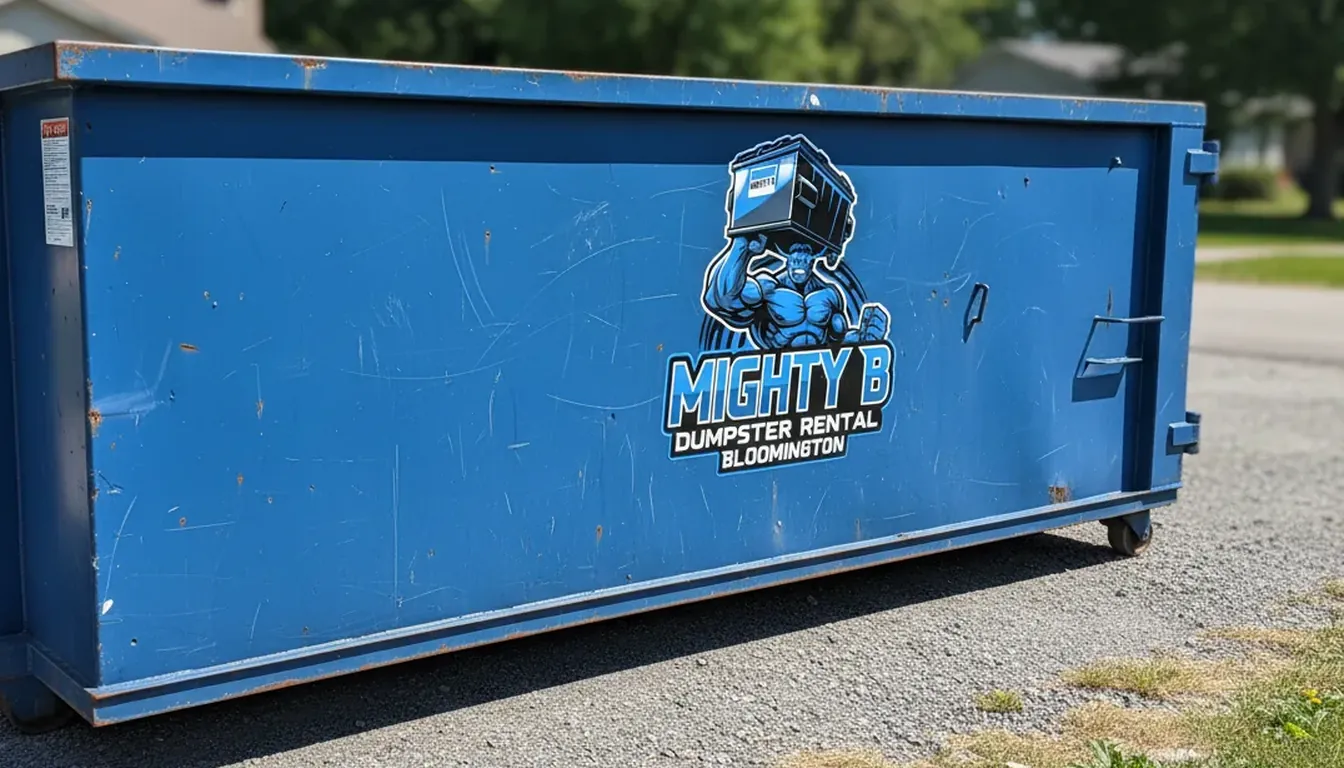
Bloomington sits on flat prairie over heavy clay, and clay does not drain. It holds water like a bowl and hands the overflow to whatever is lowest — around here, nearly always a full basement. Add a spring thaw on saturated ground, or a June storm dropping two inches in forty minutes, and half the older neighborhoods west and south of downtown are running sump pumps flat out.
This guide covers what starts once the water goes down: what you throw, what you keep, and how fast you have to decide. Speed beats thoroughness for the first two days, and thoroughness beats speed after. Most expensive mistakes come from getting that order backwards.
The 24 to 48 hour mould clock
Mould needs moisture, something organic to feed on, and time. A flooded basement supplies the first two the moment water arrives; time is the only variable you control. Household moulds start colonising damp organic material within a day or two — cardboard, carpet backing, drywall's paper facing, the foam inside a sofa. Once established it is inside the material, and wiping it with bleach accomplishes very little.
So the first 48 hours are about volume, not neatness. Get the water out. Get soaked porous material out of the building — not into a pile at the bottom of the stairs, out. Get air moving. Don't spend Saturday morning sorting a coffee can of screws while sixty square yards of waterlogged carpet pad steams in the corner. The sorting will still be there Tuesday; the mould window will not.
So get a container on the driveway the same day you can safely get down there — call before noon on a weekday and same-day delivery is usually doable.
Safety first, and this part is not optional
Standing water can be energised — a submerged outlet, a plugged-in freezer, a sump pump on a floating cord — and you cannot tell by looking. Kill power to the basement circuits at the main panel before anyone's foot goes in. If the panel is down there, or you'd have to stand in water to reach it, call an electrician or the utility instead.
Gas appliances are next. A furnace, boiler or water heater that was partly submerged can have a flooded burner, a soaked control board or a gas valve that took on water. Don't relight a pilot and don't flip the furnace on to see if it works. Shut the gas off at the appliance if the valve is safely reachable.
Then the gear: rubber boots, waterproof gloves, eye protection, an N95 once you're moving wet material, windows open. Never run a gasoline generator or pump inside the house or attached garage — carbon monoxide in a low enclosed space is what kills people during cleanups.
Three kinds of water, and why the category decides everything
Restoration people sort flood water into three categories. Know which you have before any keep-or-toss decision, because it changes what is salvageable at all.
Clean water is a burst supply line, a failed water heater tank, rain through a window well. Sanitary on arrival. Non-porous items survive it, and porous items have a real chance if dried fast.
Grey water is washing machine or dishwasher discharge, or groundwater seeping through the wall or floor joint. Contaminated, not sewage. Porous items get marginal — carpet and pad generally gone, upholstery usually gone, and whatever you keep needs disinfecting.
Black water is sewer backup, failed septic, or flood water that came across the yard. The rule is blunt: anything porous that black water touched goes out. Carpet, pad, upholstery, mattresses, drywall, insulation, particle board, cardboard, submerged clothing, soft toys. Hard surfaces can be disinfected; porous ones cannot be, reliably.
Two footnotes. Clean water degrades to grey in a day or two just sitting in a dirty basement, so a burst pipe ignored over a weekend is no longer clean-water. And if a sewer main was involved, tell the City of Bloomington — it matters for your claim.
What has to go
These aren't worth agonising over. If it's on this list and got wet, it's dumpster material:
- Carpet and especially carpet pad. The pad is a sponge, finished the moment it's soaked. Carpet is occasionally savable after clean water with fast professional extraction — but in a basement, plan on both going out.
- Particle board and MDF furniture. Bookcases, flat-pack cabinets, desks. The core swells and delaminates permanently — and this is most of the furniture in most basements.
- Mattresses and box springs. Foam and batting hold water in the middle, where nothing dries out.
- Upholstered furniture. Grey or black water: automatic. Clean water: only worth attempting if the piece is valuable and a pro is on it fast.
- Wet drywall. Cut it out a foot above the highest tide mark — moisture wicks up inside the sheet past where you can see it. Cut at a stud so the patch has something to fasten to.
- Wet insulation. Batts in the rim joist or a finished wall hold moisture against framing. Pull it all, not just the visibly soaked part.
- Cardboard storage boxes. Every one, including those that only got damp. Rebox the contents in plastic.
- Anything porous that stayed wet past about two days. Past that you aren't deciding whether it's clean, you're deciding whether to find out later.
Older Bloomington houses add a wrinkle: plaster and lath instead of drywall. Wet plaster is two to three times the weight of drywall and dries far slower. Small isolated wetting sometimes recovers if the cavity behind is opened up; anything more, and the lath with it, comes out. Budget weight for that.
What can usually be saved
Non-porous beats porous every time. Here's the list we give people standing at the bottom of the stairs.
| Item | Save or bin | Why |
|---|---|---|
| Carpet pad | Bin | Pure sponge — cannot be dried in place |
| Wall-to-wall carpet | Bin (usually) | Backing and seams trap contamination |
| Solid wood furniture | Save | Recovers if dried slowly, out of direct heat |
| Particle board / MDF furniture | Bin | Core swells and delaminates permanently |
| Sofas, chairs, mattresses | Bin | Foam stays wet inside; can't be disinfected through |
| Metal shelving, tools, file cabinets | Save | Non-porous — clean, dry, oil bare steel |
| Glass, ceramics, sealed hard plastics | Save | Wash and disinfect; nothing absorbs |
| Drywall below the water line | Bin | Paper facing feeds mould; moisture wicks upward |
| Fiberglass or foam insulation | Bin | Holds water against framing, loses R-value |
| Cardboard boxes and paper storage | Bin | Colonises faster than anything else |
| Ceramic tile or sealed concrete floor | Save | Cleanable — but check what's underneath |
| Laminate or floating floor | Bin | Fiberboard core swells; pad beneath stayed wet |
| Books, photos, documents | Triage | Freeze them to stop the clock |
| Submerged electronics | Bin — recycle separately | Unsafe to power up; banned from Illinois landfills |
Treat the keepers properly. Solid wood gets its drawers pulled and dries slowly with airflow — a fast dry in sun or beside a heater splits and cups it. Metal gets washed, dried and oiled where bare. Glass and hard plastic get detergent and disinfectant. Hard flooring gets cleaned, but lift a corner and check the slab beneath.
Documents, photographs and the freezer trick
You don't have to decide about paper on day one. Seal wet documents and photographs in ziplock bags and put them in the freezer; it stops mould and stops pages fusing. Frozen, they'll wait weeks until you can air-dry them flat or reach a restoration service. Do it before they dry into a brick, and don't peel apart a stuck stack of photos — freeze it and separate later. Photograph everything you throw out, serial numbers included, before it hits the container.
Appliances, the furnace and the water heater
Get them assessed, don't just restart them. A washer or dryer that took water in the motor or control board may run once and then fail, or fail dangerously. A furnace with a flooded burner is a carbon monoxide question, not a comfort one. HVAC and plumbing crews get slammed after a wet week here, so call early.
The basement chest freezer is its own category. It holds refrigerant, which a certified technician must recover before the shell can be scrapped — venting it is illegal. Same for a dehumidifier, a beer fridge or a stored window AC. Old TVs and computers are out too — electronics are banned from Illinois landfills under the state's electronics recycling law, submerged or not. The Ecology Action Center in Normal can tell you where those go in McLean County, and the Illinois EPA publishes the statewide bans.
Then there's the shelf of paint, thinner and pool chemicals in every Illinois basement. Wet or dry, none of it goes in a dumpster. Latex goes in only once dried solid with the lid off; oil-based paint and solvents are household hazardous waste. Our Illinois disposal list and local recycling guide cover the full list.
The weight trap: why a basement needs a smaller container
This is the most common sizing mistake we see, and it costs money. Waterlogged material is dramatically heavier than the same material dry — soaked carpet and pad run two to three times dry weight, wet drywall similar, a box of wet books near unliftable. A basement that fits comfortably in a 20 yard container dry can blow through its weight allowance half empty.
For a wet cleanout we steer people to a 15 yard or even a 10 yard can plus a second haul, rather than one big box you can't fill. A swap costs less than an overweight ticket, and the smaller can fits a narrow older driveway. Our pricing is flat-rate — delivery, pickup, weight allowance, disposal and tax as one number — so that conversation happens on the phone, not on the invoice. Our sizing guide runs the same logic for dry loads.
Keep wet material low and spread across the container floor rather than piled at one end. And if rain is forecast, get it hauled — an open can of wet drywall only gets heavier.
Dry it out properly before you close anything up
The real disaster isn't the flood. It's rebuilding over a wall cavity that was still wet and finding out six months later. Drying takes longer than people expect — commonly several days to a couple of weeks with fans and a dehumidifier running continuously, and longer in a humid Central Illinois July.
Open the cavities: pull the base trim, cut the drywall high, remove insulation, let air reach the framing. Run a dehumidifier plumbed to the sump. Point fans at surfaces, not at the middle of the room. Borrow a moisture meter and check the framing against undamaged wood elsewhere in the house. For a slab, tape a square of plastic down overnight — if it darkens underneath, the concrete is still wet and you aren't ready to board up.
And think hard before carpeting a basement again. Sealed concrete or tile lets you mop the next one out instead of gutting it.
Insurance: check before you assume
A standard homeowner policy typically does not cover flood — surface water entering from outside — and often doesn't cover sewer or drain backup either, unless a specific rider or endorsement was purchased. A sudden burst supply line is usually treated differently from groundwater and sewer events. The specifics depend on your policy and endorsements, so don't take a rule of thumb from a neighbor or from us. Call your agent before you throw anything away, and note the date, the water line height and the source.
Preventing the next one
Clay soil isn't going to change, so every fix is about keeping water off the foundation and giving what gets in somewhere to go:
- Sump pump with battery backup. Storms cut power at exactly the moment the pump is needed most — a backup or water-powered secondary is the highest-value item here. Test the primary twice a year with a bucket in the pit.
- Backflow prevention valve on the sewer lateral if backup is your failure mode — licensed plumber work, and often a permit item.
- Grading. Soil should fall away from the foundation for several feet. On flat lots this quietly reverses as backfill settles — fix it with soil, not mulch.
- Downspout extensions. A downspout dumping at the corner of the house is the cheapest possible way to flood your own basement.
- Window well covers and clear well drains — no leaves sitting in them.
- Call 811 before digging for drainage work — JULIE is free and required.
If the same storm took shingles or fence panels too, our storm cleanup guide covers the outside half, and junk removal is there if you'd rather not carry it up the stairs.
Get a container on the driveway
A flooded basement is a clock, not a project. Call Mighty B Dumpster Rental Bloomington at (309) 503-0748 — tell us what the water was and what's coming out, and we'll size it honestly for wet weight, quote one flat number, and put driveway protection boards down before we set it. Call before noon on a weekday and we can usually be there that afternoon.
Need a container in Bloomington or anywhere in McLean County? Call (309) 503-0748 and describe the job. We will name the size, the flat rate and a delivery slot — often the same day. No forms, no waiting on an email.