
Rural & Farm
Farm Property Cleanout in Central Illinois: Full Guide
Machine sheds, corn cribs, barns and farmhouse attics: what has real value, the hazardous list farms accumulate, lane and ground conditions, and how to size it.
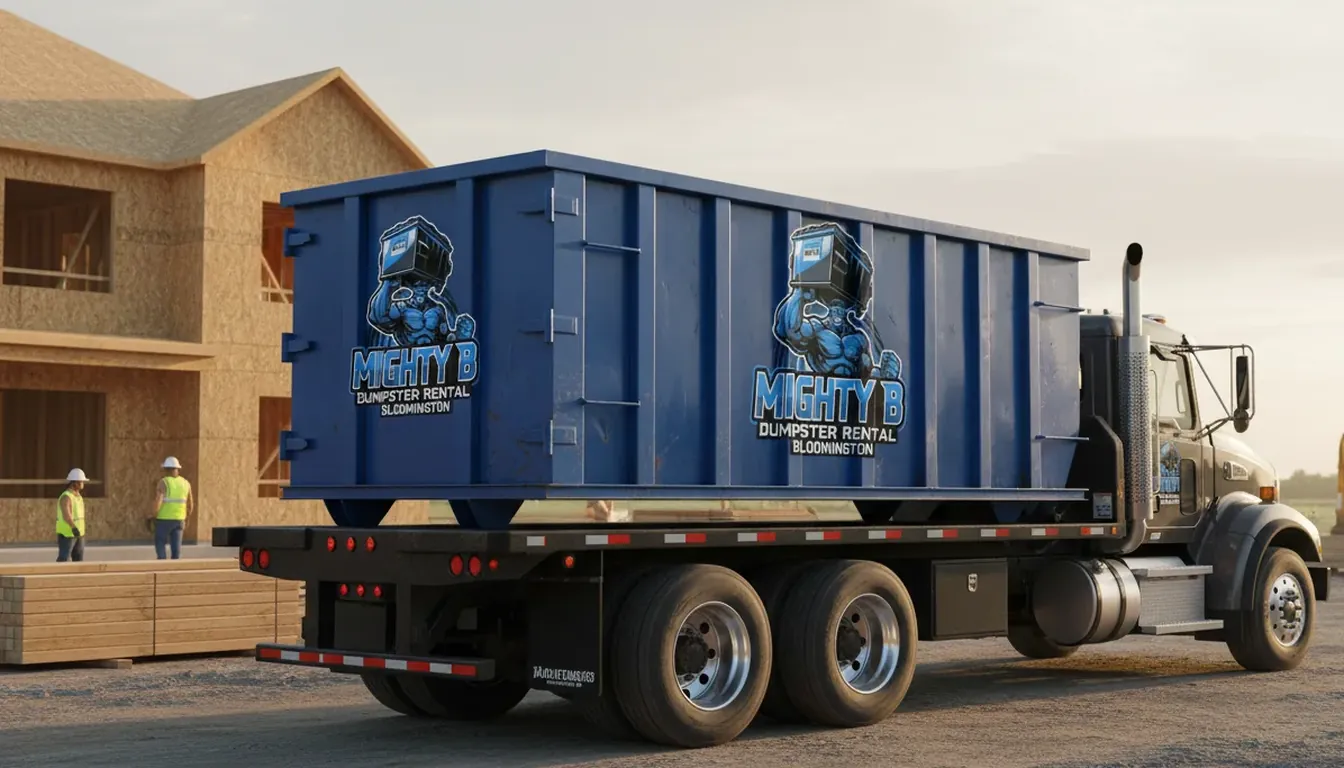
A farm cleanout does not look like a house cleanout, and anybody who has walked a farm lane knows it inside ten minutes. In a house you decide what to keep. On a farm you decide what things are — the pile of steel behind the machine shed is either forty years of junk or a scrap check, and the drums along the north wall are either empty or a problem. Nobody left a label.
We have run roll-offs out of Bloomington since 2013, and a good share of them go down gravel lanes in McLean County. Farm jobs are their own animal: different buildings, different hazards, different ground, and a calendar that will not bend for you.
Work building by building, not room by room
Walk the place on day one with a notepad and put every building in one of three buckets: clear it and keep it, clear it and tear it down, or leave it for now. Farms punish people who try to do everything at once. Pick two buildings, finish them, then move.
Machine sheds and pole barns
This is where the volume is. Implements and implement parts, tires, hydraulic hose, drums of oil, twine and net wrap, feed sacks, hog panels, lumber stacked "for a project," coffee cans of hardware, and usually a truck that has not run since the Clinton administration. Machine sheds are also where most of the hazardous material lives, so this is the building you sort before you rent anything.
Corn cribs
Slat and wire cribs are mostly rotten boards, corn dust, decades of pigeon mess and a roof of rusted steel. Two warnings: an old crib is often structurally shot, so do not send anyone up inside one to grab boards, and the dust in a long-closed crib is genuinely nasty — respirator, not a bandana.
Grain bin surrounds
The bin itself is a separate decision, but the ring around it collects augers, aeration fans, drying equipment, bent tin, concrete and ladders. Never enter a bin that still holds grain, and do not let a helper do it either. Flowing grain kills people in this state every year.
Hog houses and cattle barns
Gates, feeders, waterers, plastic feed bins, rolls of woven and barbed wire, and a lot of wood soaked with forty years of manure. That wood is far heavier than it looks and is the number one reason a farm container goes over its weight allowance. Put it in a smaller box on purpose.
Milk houses
If the place ever milked, slow down here. Stainless bulk tanks, pipeline and receiver jars have real resale value to dairy equipment dealers. But milk houses also hold acid and chlorine sanitizers, a compressor with refrigerant in it, and often asbestos pipe insulation on the boiler lines. None of that goes in a container.
Workshops
The best and worst building on the place. Cast iron vises, anvils, post drills, hand tools with real maker names, drawers of usable hardware — genuine money in there. Also batteries, half-used aerosols, solvent cans, gas in unmarked jugs and a parts washer nobody has drained since the eighties.
Farmhouse attics and basements
Central Illinois farmhouses are old: plaster and lath at two to three times the weight of drywall, damp full basements, canning jars by the hundred and paperwork going back generations. Treat it like any other estate cleanout and read every box before it goes — deeds, photographs and abstracts turn up in feed sacks and cookie tins.
Building-by-building plan
| Building | Typical contents | Container plan | Hazards to pull out first |
|---|---|---|---|
| Machine shed / pole barn | Implement parts, tires, drums, hose, twine, feed sacks, lumber, scrap steel | A 20 for dense scrap, then a 30 swapped once or twice for bulk | Used oil and filters, batteries, tires, chemical containers, propane |
| Corn crib | Rotten slats, corn dust, roofing steel, old wire | 30 yard — light and bulky; keep the steel out for scrap | Structural check and respirator rather than chemicals |
| Grain bin surround | Augers, fans, drying gear, bent tin, ladders, panels | Steel to the scrap yard, one 20 for the remainder | Electrical gear, burner fuel, LP lines |
| Hog house / cattle barn | Gates, feeders, waterers, manure-soaked lumber, fence wire | Multiple 20s — weight, not volume, is the limit | Treated posts, tangled wire, vet chemicals, medicated feed |
| Milk house | Bulk tank, pipeline, compressor, glass, chemicals | Sell or scrap the stainless; a 10 or 15 takes the rest | Acid and sanitizer, refrigerant unit, asbestos pipe wrap |
| Workshop | Tools, hardware, benches, welders, solvents, batteries | Sort and sell first; a 15 for what is truly finished | Solvents, aerosols, batteries, fuel jugs, washer fluid |
| Farmhouse attic / basement | Plaster, furniture, jars, papers, damp storage | 20 for plaster and dense debris, 30 for household bulk | Paint, electronics, propane cylinders, mercury thermostats |
What actually has value, and what does not
Do not let the container eat what pays. Before you fill anything, pull out:
- Scrap steel and iron — implements, tin, gates, wheels, axles, frames. Farms routinely have tons of it, and a scrap yard pays for what a landfill charges you to bury.
- Cast iron — implement seats, hit-and-miss engines, plow parts, hog kettles. The collector market runs well beyond scrap value.
- Copper — barn wiring, milk house plumbing and the windings inside every dead electric motor.
- Hand tools — stamped wrenches, planes, anvils, vises, forge gear. Farm auctions do very well with these.
- Barn lumber — hand-hewn beams, weathered siding and true-dimension oak sell to reclaimed-wood buyers, but only if dry, sound and not paint-soaked.
What does not pay: punky lumber and rotten slats, particle board, anything water-swollen, chemical-soaked wood, plastic feeders and barrels, feed sacks, and — sorry — most farmhouse furniture. That is container material, and there is no shame in it.
The hazardous list a farm builds up over forty years
This is what separates a farm cleanout from every other job. Each of these needs its own route. None of them belongs in a roll-off, and putting them in one gets a load rejected at the scale, which you then pay to bring back.
- Used motor and hydraulic oil, and filters. Used oil is banned from Illinois landfills. Keep it sealed and labelled and take it to a used-oil collection point; many ag retailers and shops accept it. Filters must be hot-drained and handled as used-oil waste.
- Lead-acid tractor and truck batteries. Banned, and no reason to pay for disposal — retailers take them back on the core system.
- Tires. Whole tires are banned from Illinois landfills, and farms hold the worst version of the problem: fluid-filled implement and combine tires weighing hundreds of pounds each. Those need a registered used-tire hauler or a collection program, handled per tire rather than by the container. Line it up early — usually the longest lead time on the job.
- Pesticide and herbicide containers. Triple-rinsed and punctured jugs go through agricultural container recycling programs. Un-rinsed containers are hazardous waste, full stop.
- Unusable or unidentified product. Jugs and bags of chemistry from a grandfather's era, including long-deregistered products, need a proper agricultural pesticide collection route. Do not open them, pour them out or burn them. Check what is currently available through the Illinois EPA before you touch that shelf.
- Treated fence posts. Creosote, penta and older CCA posts are not scrap, are never burned and are handled differently than clean wood. Ask the receiving facility what it accepts before loading a hundred of them.
- Scrap wire. Rolled barbed wire, woven fence and high-tensile do not belong loose in a container — they tangle in the equipment at the other end and can get a load turned away. Roll it tight, band it, and take it to a scrap yard.
- Asbestos. This is the one that catches people. Outbuilding siding is often cement-asbestos board, and so is much pre-1980 corrugated roofing, along with pipe and boiler insulation in milk houses and basements. It never goes in a container under any circumstances, and breaking it up is the worst thing you can do. If the siding is a hard grey sheet, get it assessed before demolition, not after.
Then add the everyday Illinois bans that hit a farm hard. Electronics are banned from landfills under the state recycling law — the shop computer, the office monitor, the farmhouse TVs. Landscape waste has been banned since 1990, which matters if you are clearing fencerows or a dead tree line; brush goes to composting, not into a mixed load. Liquids, paint, solvents, propane cylinders and refrigerant appliances all need their own handling. Our Illinois allowed and banned items guide covers the full list, and the Ecology Action Center in Normal is the local hub for recycling and household hazardous waste questions in McLean County.
Access and ground conditions
A loaded roll-off truck is heavy, long, and cannot back out of a mistake easily. Before we come, we want to know:
- The lane — width, crown and whether the shoulders are soft. High-crowned gravel with deep ditches on both sides is what causes trouble.
- Overhead — tree canopy over the lane and low service drops. The hoist goes much higher than the truck when a box is set or picked up.
- The culvert at the field entrance — farm culverts get crushed, silted in and forgotten, and nobody knows the rating. If it looks questionable, we set the box on the near side and you haul to it.
- Tile lines and septic — never park a loaded container over a shallow main, a lateral or a septic field. Old clay tile sits shallower than anyone remembers and does not announce itself until you have a wet spot the next spring.
- A turnaround — ideally a concrete apron or hard pad by the building you are clearing.
Ground condition decides the season. Frozen ground drives beautifully and dry late summer is nearly as good. The spring thaw is the worst window there is: saturated clay under a thin dry crust will swallow a set of duals in ten feet, and a loaded truck stuck on a farm lane is a bad day for everybody. If you are trenching or digging post holes as part of the project, call 811 through JULIE first — and remember that private lines inside a farmyard, like buried electric to the shop or gas to a dryer, are not located by that system.
Timing around the farming calendar
Nobody who farms has a spare hour during planting or harvest. That takes out April into early June, and late September into November when combines and grain trucks own the two-lanes. Two windows are left.
- Late winter, January to early March. Frozen ground, no crop work, and a hard deadline if there is a spring auction. This is the best window on most farms and the one to book ahead for.
- Midsummer, July into August. Spraying is done, harvest prep has not started, ground is firm. Hot work inside a steel building, so start at daylight.
If there is an estate auction, sequence it right: the auctioneer goes first, then the cleanout. Bring a container in before the sale and somebody throws away the thing that would have brought the most money.
Sizing: several loads beat one enormous box
The instinct is to order the biggest container made and be done with it. That is usually the wrong call. A 40 is long, needs plenty of straight room to set, and once it is placed it stays placed. Farms are spread out, and the walk from the hog house to a box parked by the shop is what kills a weekend.
What works better is a 20 yard for anything dense — manure-soaked lumber, plaster, concrete, dirt-laden debris — and a 30 yard for bulky lighter material, swapped as many times as the job needs. Same container, moved to the building you are actually working in. Our pricing is flat rate — delivery, pickup, weight allowance, disposal and tax as one number — so you know what a swap costs before you ask. Keep the box on gravel or concrete rather than the yard.
The part nobody warns you about
Clearing a family farm is not a weekend of hauling. It is the drawer with every bolt sorted by size because somebody spent winter evenings doing that. It is the handwriting on a feed sack, and a shop that still smells like the person who worked in it. Families routinely get through three buildings in good order and stall out at the door of the fourth.
Two things help. Keep a small protected "decide later" corner in one building and put anything genuinely hard in there rather than arguing about it in the rain. And give the job more days than you think it needs. Our estate cleanout checklist works for the farmhouse portion, and if the family is scattered and short on hands, our junk removal crew can do the loading while you handle the deciding.
Planning a farm property cleanout in Central Illinois? Call Mighty B Dumpster Rental Bloomington at (309) 503-0748 and talk it through with somebody who has been down a few farm lanes. We will size it, stage it around planting and harvest, and flag what needs a different route before it reaches the container — or send us the details and we will come back to you with a plan.
Need a container in Bloomington or anywhere in McLean County? Call (309) 503-0748 and describe the job. We will name the size, the flat rate and a delivery slot — often the same day. No forms, no waiting on an email.