
Rules & Disposal
What Can Go in a Dumpster in Illinois: Bloomington List
Most of what leaves a Bloomington house is fine in a roll-off. Here is the complete Illinois list: what goes in, what is banned, and where banned items go.
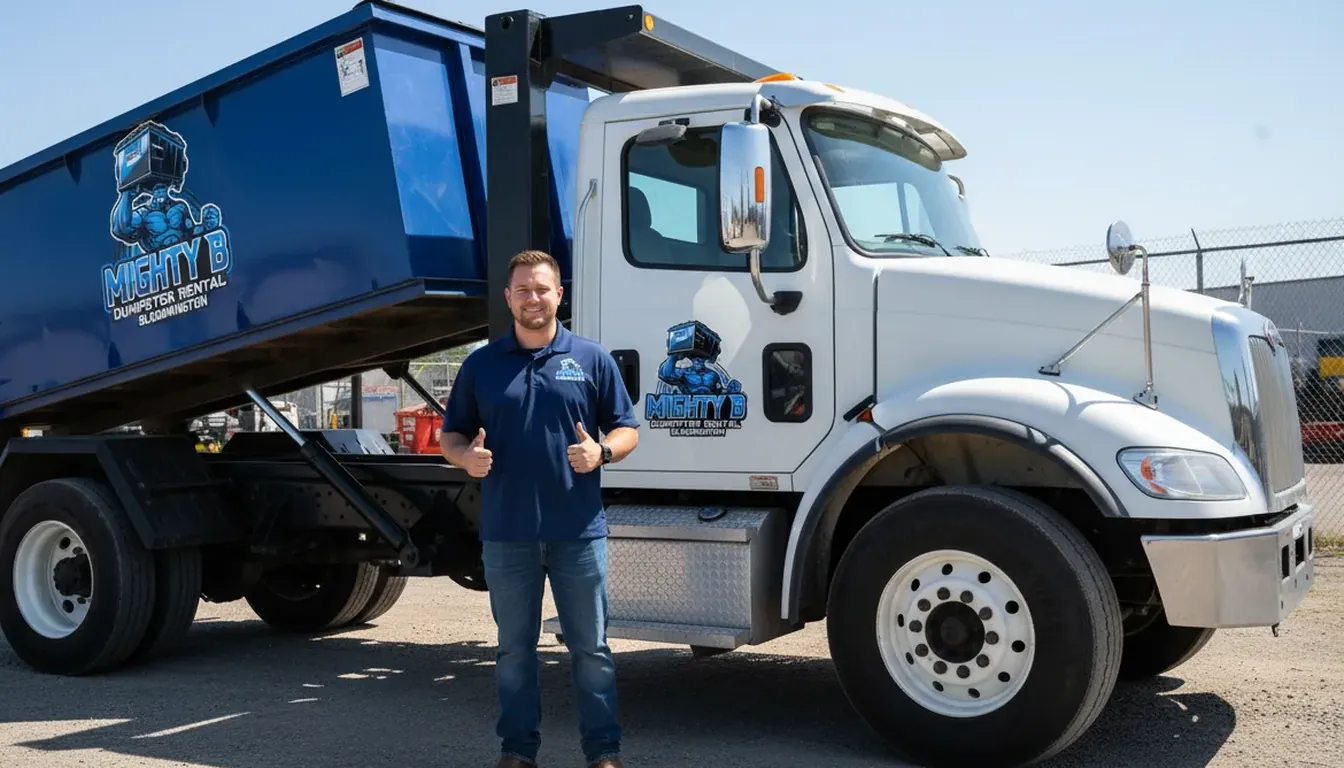
Every week somebody in Bloomington or Normal asks us some version of the same question: "can I just throw this in?" Usually it is a fridge, a stack of old tires from a farm shed off the Lexington blacktop, a garage full of half-empty paint cans, or a TV that has been in a basement since the digital switchover. The honest answer is that most of what comes out of a house or a job site is fine. But Illinois has a specific list of banned materials, and that list is not a suggestion — it is state law, and it is enforced at the scale house, not at your curb.
We have run roll-offs in McLean County since 2013, so here is the complete list as it actually plays out: what goes in, what is banned and where it has to go instead, and the grey areas people call about constantly.
The green-light list: what goes in without a phone call
Start with the good news, because it is most of the load. A standard roll-off takes general non-hazardous solid waste, which covers the overwhelming majority of a cleanout or a remodel:
- Furniture — couches, sectionals, dressers, tables, bed frames, bookcases, patio furniture, particle-board anything.
- Mattresses and box springs — see the grey-area section below, because these are allowed but they are bulky and awkward.
- Carpet, pad and underlayment, plus vinyl, laminate, tile, hardwood and subfloor.
- Appliances with no refrigerant — washers, dryers, dishwashers, ranges, ovens, water heaters, microwaves, furnaces.
- General household junk — clothing, toys, books, kitchenware, boxes, decor, whole basements and attics.
- Wood — framing lumber, deck boards, fence panels, pallets, plywood, trim, doors, cabinets and countertops.
- Drywall and plaster, lath, insulation, ceiling tile.
- Siding — vinyl, aluminum, fiber cement, wood — plus soffit, fascia and gutter.
- Roofing — asphalt shingles, felt, ridge vent, flashing, and the ripped-off decking underneath.
- Fixtures — toilets, tubs, sinks, vanities, light fixtures, ductwork, non-refrigerant HVAC components.
- Non-hazardous construction and demolition debris generally — the mixed pile a remodel or a tear-out produces.
The only real limit there is weight, not permission. Our pricing is flat rate with a weight allowance built in, and plaster, tile and wet basement contents eat that allowance far faster than furniture. Our guide on what size dumpster you need covers it, and the pricing page explains the flat rate.
The Illinois landfill bans, one by one
These are materials Illinois specifically keeps out of landfills. Each has a reason, and each has somewhere else to go.
Electronics
Under the Illinois Electronic Products Recycling and Reuse Act, covered electronics cannot be landfilled. That means televisions, computer monitors, desktops, laptops, printers, scanners, keyboards, mice, cables and most peripherals. The reason is straightforward: circuit boards, batteries and older display glass carry lead, mercury and other heavy metals nobody wants leaching in a landfill cell, and the copper, gold and steel inside are genuinely worth recovering.
Where it goes instead: a registered electronics recycling collection. Accepted-item lists change, so check current McLean County options through the Ecology Action Center in Normal before you load a single screen. Set electronics aside in their own box as you work — digging them back out of a half-full container is miserable.
Landscape waste
Illinois banned landscape waste from landfills in 1990, and it has been a hard line ever since. Grass clippings, leaves, brush, branches and garden trimmings all go to composting, not into a mixed load. Organics in a landfill generate methane and eat airspace that is expensive to build; composted, the same material becomes useful.
This is the ban that trips up Bloomington-Normal homeowners most, because a derecho or straight-line wind event drops limbs across half the neighborhood in an afternoon and the instinct is to throw it all in one box. Tree and brush debris has to stay a separate clean load — see yard waste removal and storm debris cleanup, and tell us if a job is mixed so we plan two containers.
Whole tires
Whole tires are banned. They trap air, float back up through a landfill cell, resist compaction and hold standing water that breeds mosquitoes. Illinois runs a used-tire management program, and tires go to a registered collection point — often a tire retailer, sometimes a county event. Farm properties around Danvers or Colfax turn up a whole fence line of them; count them before you call.
Lead-acid batteries
Car, truck, tractor, mower and marine batteries are banned outright. They hold sulfuric acid and lead, and they are also among the most successfully recycled products in the country. Retailers that sell batteries generally take the old one back with a core credit. A cracked case in a compacting load is a real hazard for whoever handles it.
Used oil and filters
Used motor oil, transmission fluid, gear oil and their filters are banned. A single gallon contaminates an enormous volume of groundwater, and used oil is re-refinable. Drain filters thoroughly and take both to an automotive retailer or collection site. This matters on rural properties where decades of shop maintenance has piled up behind the machine shed.
Appliances containing refrigerant
Refrigerators, freezers, window air conditioners, dehumidifiers, wine coolers and mini-fridges all hold refrigerant, and it has to be professionally recovered by a certified technician before the unit is scrapped. Venting it is illegal under federal law. The metal shell is perfectly recyclable once the refrigerant and compressor oil are out.
Practically: get the unit evacuated first and keep the documentation, or arrange an appliance pickup that handles recovery. In an estate cleanout, deal with it as its own line item at the start, not on load day.
Never, in any dumpster, anywhere
Separate from the Illinois bans, there is a universal list. None of this goes in a roll-off from us or anyone else:
- Liquids of any kind — they leak, they add weight, and they turn a mixed load into a spill.
- Wet paint, stains, varnish, lacquer and thinners.
- Solvents — acetone, mineral spirits, degreasers, adhesives and adhesive removers.
- Fuel and automotive fluids — gasoline, diesel, kerosene, antifreeze, brake fluid, power steering fluid.
- Propane tanks and any pressurised cylinder — grill tanks, camping canisters, oxygen, acetylene, helium, old refrigerant jugs.
- Aerosol cans that are not fully empty.
- Asbestos-containing material — this requires a licensed abatement contractor and a separate regulated disposal path. Common in pre-1980 Bloomington homes as pipe wrap, floor tile, mastic and some siding. If you suspect it, stop and have it tested.
- Medical and biological waste — sharps, blood-contaminated material, lab waste.
- Ammunition, flares, fireworks and explosives.
- Anything else labeled flammable, corrosive, reactive or toxic, including pesticides, herbicides, pool chemicals and drain cleaner.
Crop chemical jugs deserve a note out here. On farm ground they have their own triple-rinse and collection protocol, and they do not belong in a general container even when they look empty.
Paint: the one everybody gets wrong
Paint is the single most common banned item we find. The rule is simple once you know it.
Latex and water-based paint can go in only once it is completely dried solid — no liquid left. For a small amount, take the lid off and let it air-dry somewhere ventilated, away from kids and pets. For a fuller can, stir in kitty litter, sawdust, shredded paper or a commercial hardener until it is stiff enough not to slump when tipped. Leave the lid off so the driver can see it is cured. A cured can of latex is just solid waste.
Oil-based paint, stain, varnish, lacquer and every solvent cannot be dried out and thrown away. They are household hazardous waste, full stop, and go to a household hazardous waste collection. Check current McLean County HHW options with the Ecology Action Center or through the Illinois EPA, which oversees the state's household hazardous waste program.
The grey areas people always ask about
- Mattresses and box springs — allowed. They are bulky and springy, so put them in flat and early, on the bottom, before anything goes on top.
- Treated lumber — deck boards, posts, landscape timbers. Generally accepted as construction debris, but never burn it, and tell us if it is a large volume.
- Railroad ties — a real problem item. They are heavily creosote-treated and many disposal sites refuse them or handle them separately. Always ask before loading; they are common on rural properties out here as retaining walls and driveway edging.
- Roofing shingles — fine, and very heavy. Size for weight, not volume; our roofing dumpster page walks through it.
- Plaster and lath — allowed, and the defining Bloomington material. Pre-1940 homes west and south of downtown are full of it, and it weighs two to three times what drywall does.
- Concrete, brick, block, asphalt, stone and dirt — accepted, but only as a dedicated clean load in a small container, because clean rubble can be crushed and reused while a mixed load cannot. Never mix it into a general cleanout. See concrete and heavy debris.
- CRT televisions and monitors — the old tube sets. Banned as electronics, and their leaded glass is exactly why the ban exists. Recycling sometimes carries a handling charge; it is still the only legal route.
- Microwaves — fine, no refrigerant. In goes the microwave, out comes the mini-fridge sitting next to it.
- BBQ grills — the grill body is fine. The propane tank is not, ever. Disconnect it and exchange or return it at a retailer that takes cylinders.
- Fire extinguishers — pressurised cylinder, so no. Many fire departments or HHW collections take them; a fully discharged, valve-removed extinguisher is sometimes accepted as scrap metal, but ask first.
- Smoke detectors — photoelectric units are ordinary waste. Ionization units hold a small radioactive source; many manufacturers take them back by mail, which is the cleaner answer.
- Medications and sharps — never in a dumpster. Prescription drugs go to a pharmacy or law-enforcement take-back box. Sharps go in an approved rigid container to a sharps collection point.
Quick reference
| Item | In the dumpster? | Where it goes instead |
|---|---|---|
| Furniture, mattresses, carpet | Yes | Load flat and early |
| Household junk, clothing, boxes | Yes | Donate anything still usable first |
| Wood, drywall, siding, flooring, fixtures | Yes | Standard C&D load |
| Roofing shingles | Yes | Size for weight, not volume |
| Plaster and lath | Yes | Expect 2-3x the weight of drywall |
| Washer, dryer, range, water heater, microwave | Yes | No refrigerant, no problem |
| Concrete, brick, block, dirt | Clean load only | Dedicated small container for crushing |
| Latex paint | Only fully dried | Harden with litter or sawdust, lid off |
| Treated lumber | Usually | Tell us the volume; never burn it |
| Railroad ties | Ask first | Creosote — often handled separately |
| TVs, monitors, computers, printers | No | Registered electronics recycling (state ban) |
| Grass, leaves, brush, branches | No | Composting — separate clean load |
| Whole tires | No | Registered tire collection or retailer |
| Lead-acid batteries | No | Battery retailer, usually with core credit |
| Used oil and filters | No | Automotive retailer or collection site |
| Fridge, freezer, window A/C, dehumidifier | No | Certified refrigerant recovery first |
| Oil-based paint, stain, solvents | No | Household hazardous waste collection |
| Fuel, antifreeze, automotive fluids | No | Household hazardous waste collection |
| Propane tanks, cylinders, fire extinguishers | No | Retailer exchange or HHW / fire department |
| Asbestos-containing material | No | Licensed abatement contractor |
| Medications and sharps | No | Pharmacy take-back / sharps collection |
| Ammunition, flares, fireworks | No | Law enforcement or bomb squad guidance |
What actually happens if banned material shows up in a load
It is not dramatic, but it is expensive. Loads get inspected. A driver who spots a propane tank or a TV on top at pickup will leave the container until it is removed, which costs you a day. If it turns up at the disposal facility, the load gets flagged and the material is pulled and rerouted by hand — that comes back as a sorting or contamination charge, and hazardous material can add cleanup costs and regulatory penalties.
The comparison worth making: setting six items aside in the garage takes ten minutes, and getting a load sorted costs real money and days of schedule. That asymmetry is why we would rather you call and ask about one questionable item than guess. Nobody here is annoyed by the question — we are annoyed by the surprise.
For McLean County specifics — what is collected, when and where — the county and the Ecology Action Center stay current. Our Bloomington recycling and disposal guide covers the same ground from the recycling side.
Got one item you are not sure about? Call Mighty B Dumpster Rental Bloomington at (309) 503-0748 and describe it. We will tell you straight whether it goes in the box or somewhere else, and we would far rather have that conversation before delivery than at the scale. Same-day delivery if you call before noon on a weekday, next morning otherwise, on driveway protection boards every time.
Need a container in Bloomington or anywhere in McLean County? Call (309) 503-0748 and describe the job. We will name the size, the flat rate and a delivery slot — often the same day. No forms, no waiting on an email.