
Landlords
Student Rental Turnover Dumpster Guide
ISU and IWU turnover compresses into two weeks each May. Here is how Bloomington-Normal landlords size containers, dodge Illinois landfill bans, and book before the trucks run out.
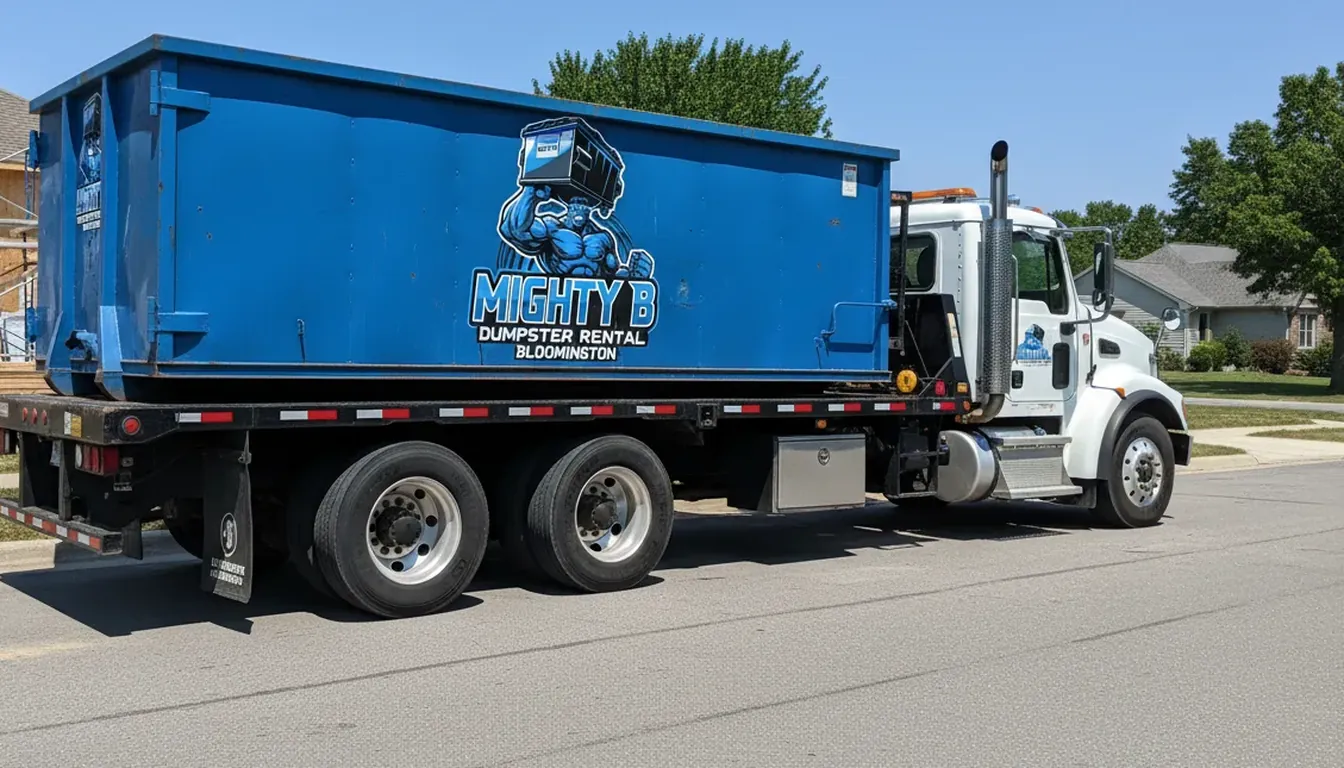
If you own or manage rental property near ISU or Illinois Wesleyan, you know the shape of the year. Everything is calm, then in about ten days in May the whole town empties, and then you have until the first of August to make a few dozen bedrooms rentable again. We run roll-off containers in Bloomington-Normal year round, and turnover season is the only stretch where the phone rings faster than we can load trucks. Here is how to get through it without losing the deposit fight or the deadline.
The Bloomington-Normal calendar is genuinely unlike other markets
Most college towns stagger. Ours does not. The ISU academic year ends in early-to-mid May, and a very large share of the private student rental stock in Normal and west Bloomington turns over inside roughly the same two-week window. Then the standard lease start is 1 August. One compressed clear-out, one compressed make-ready, and a dead middle where nothing is urgent until suddenly everything is.
The consequence: every landlord in town wants the same container on the same weekend. In a big metro a rental fleet absorbs that. Here the fleet is finite, and the roads are the same I-55/I-74 crossroads everyone else is using to haul their kid's furniture home. Book weeks ahead, not days. We start taking May reservations in March. By the last week of April the good Saturday slots are gone, and what is left is Tuesday drops and swaps when a truck frees up.
If you run a portfolio, pick your dates in winter and put them on standing order. We will hold them. What we cannot do is manufacture a truck on 9 May because the place turned out worse than you thought.
What actually gets left behind
Student move-out debris has a signature. Bulky, light, and it fills volume far faster than weight. The list barely changes year to year:
- Mattresses and box springs — usually one per bedroom, sometimes two. These are the single biggest volume item and they do not compress.
- Futons and cheap frames — the futon is the unofficial mascot of student housing. Metal frame, foam mattress, both awkward.
- Particle-board furniture — desks, dressers, shelving from the big-box store. You cannot disassemble it without destroying it, so do not waste labour trying. Break it and load it.
- Mini-fridges and microwaves — often several per house, because everyone brought their own. Fridges are a separate problem, covered below.
- TVs, monitors, printers, dead laptops — also a separate problem.
- Rugs, bedding, textiles — the volume surprises people every year. Comforters, pillows, curtains, half a closet of clothes.
- Food waste and the shared kitchen's entire contents — open condiments, freezer contents, cookware nobody claimed. This gets ugly fast if the property sits a week in humid Central Illinois weather.
Because this debris is bulky and light, weight instinct will steer you wrong. A house of mattresses and futons tops out a container long before it approaches a weight allowance. That is a good problem: you can go bigger without a heavy-load surprise, which is not true of the concrete and heavy debris work we do the rest of the year.
The Illinois rules that catch landlords out
This is where turnover jobs generate unexpected charges, almost always because someone treated the container as a hole in the ground. Illinois has landfill bans that apply whether or not anyone is watching.
Electronics are banned from Illinois landfills. Under the Electronic Products Recycling and Reuse Act, televisions, monitors, computers, printers and a list of related devices cannot be landfilled in this state. Every abandoned dorm TV, every dead monitor on a desk, has to be routed to an electronics recycling channel separately. If it goes in the container it has to come back out, and that sorting is a cost someone pays. Confirm current collection options through the Ecology Action Center before you plan your week.
Landscape waste has been banned from Illinois landfills since 1990. If your turnover includes clearing the overgrown side yard nobody mowed since March, that material is a separate stream. We handle it as yard waste removal, not as part of the household load.
Anything with refrigerant needs professional recovery first. That means the mini-fridges, and any window AC unit the tenants installed and abandoned. The refrigerant has to be recovered by someone qualified before the unit can be scrapped or disposed. Tell us how many you have when you book and we will tell you how to route them.
Tires and lead-acid batteries are also banned. Student houses produce more of these than you would think — a car battery on a shelf, four tires in a garage from a car that left campus two years ago.
| Item left behind | Goes in the roll-off? | What to do instead |
|---|---|---|
| Mattresses, box springs, futons | Yes | Load flat, early, at the bottom |
| Particle-board furniture, rugs, textiles | Yes | Break down to reduce air gaps |
| TVs, monitors, computers, printers | No | Illinois e-waste recycling channel |
| Mini-fridges, window AC units | No | Refrigerant recovery first, then scrap |
| Yard and landscape waste | No | Separate landscape waste collection |
| Tires, car batteries | No | Retailer or county take-back program |
| Paint, solvents, pool chemicals | No | Household hazardous waste event |
We wrote a fuller breakdown in our guide to what can and cannot go in a dumpster in Illinois. Rules and programs change; verify current requirements with Illinois EPA rather than relying on what was true two seasons ago.
Sizing by unit count, not by guesswork
Stop thinking in cubic yards. Think in bedrooms — that is the unit that predicts student debris.
Single studio or one-bedroom
One mattress, a futon or a small sofa, a desk, kitchen contents. A 10 yard container handles this comfortably, and it fits in a single parking space or a short driveway, which matters more than capacity in the tight streets near campus.
Three or four bedroom house
The classic Normal student rental. Four mattresses, four desks, a living room's worth of furniture and a kitchen. A 20 yard container is the honest answer for most. A 15 works if the tenants were tidy. If there is a basement or garage that has been accumulating three years, go 30 yard.
Small multi-unit building
Six to twelve units means a 30 or 40 yard box plus a swap, not one enormous container you hope will hold. A swap-out is a better plan than a bigger box, because the crew keeps working while a full container leaves and an empty one lands. It also means you never have a full container sitting open through a weekend.
A whole portfolio in one week
Now it is a schedule, not an order. The pattern that works: two or three containers positioned at your largest properties as staging points, a route your crew works in sequence, and swaps at fixed times so nobody waits on a phone call. See our property manager guide for how we structure multi-site work.
Placement realities near campus
The streets west and south of the ISU campus are older, narrower, and during move-out week they are lined bumper to bumper. A few things we have learned the hard way:
- Measure the approach, not just the spot. A 40 yard box needs a straight run and overhead clearance. Low branches on those old streets are a real constraint by May.
- Shared driveways need a conversation first. If your tenant shares a drive with the neighbour's tenant, sort it out before delivery day, not while our driver idles at the curb.
- On-street placement may need a permit. Requirements differ between Bloomington and Normal and can change. Check with the Town of Normal or the City of Bloomington directly, and see our notes on dumpster permits in Bloomington-Normal.
- An open container on a public street in a student area WILL be filled overnight by other people. Not a maybe. Neighbours, passing move-out crews and people who spotted it from the road all contribute. Place it inside the property line, or cover it every night. Paying for a container that is half full of somebody else's sofa is a common, avoidable loss.
- Driveway protection. We put boards down on every drop, no exceptions. Older asphalt drives in these neighbourhoods are exactly the kind that mark.
Abandoned property: slow down before you skip it
Illinois has specific requirements governing how a landlord must handle a tenant's abandoned personal property, and the procedures and timelines are not something to take from a blog post — including this one. Municipal rules can add another layer. Before you throw out anything of apparent value — a laptop, a bike, a game console, a box of documents, anything that looks like someone meant to come back for it — talk to your attorney or check with the relevant municipality.
The practical middle ground: obvious trash goes straight in the container, and anything plausibly valuable gets boxed, labelled with the unit and date, photographed, and set aside while you get an answer. That costs you a corner of the garage. It costs far less than the alternative.
Document everything before it goes in the box
Every deposit dispute we hear about traces to one failure: nobody photographed the unit before the clear-out. Once the container leaves, the evidence is gone.
- Photograph every room wide, then close on damage, before anyone touches anything.
- Photograph the container as it fills. A picture of four mattresses and a broken dresser in a box is worth more than an itemised list nobody believes.
- Keep the disposal paperwork. Flat-rate invoicing gives you one clean document per property — far easier to attach to a deposit deduction than a stack of transfer-station tickets.
- Note anything banned that you routed separately. That is a real cost and it belongs in your records.
A realistic week-by-week timeline
- February to March: Lock your container dates. Standing orders, named properties, named swap days.
- Late April: Send tenants a written reminder of what they must remove, specifically calling out mattresses, electronics and mini-fridges. Confirm your delivery slots with us.
- Move-out week (early-to-mid May): Containers land. Cover or gate them nightly. Photograph units as they empty. Segregate e-waste and refrigerant appliances into a locked garage or a marked corner.
- The week after: Swaps and final pickups. Route the banned material. Finish photo documentation and close out deposits.
- Late May to June: Repairs, paint, flooring. If a unit needs more than cosmetic work, this is when a second small residential container earns its keep.
- July: Punch list, final cleans, small-volume junk pulls. A same-day container covers the surprises.
- 1 August: Keys out.
Make it a system you run once a year
The landlords who handle turnover well are not working harder. They have made it repeatable: dates booked in winter, one point of contact on each side, a fixed swap schedule so crews are never idle, and a written tenant notice that reduces what gets abandoned at all. Flat-rate pricing — delivery, pickup, weight allowance, disposal and tax in one number — makes that plannable, because you budget per property in February instead of guessing in May.
We cover Bloomington, Normal and the surrounding McLean County towns. We are a family operation, so when you call in March about your May dates, you are talking to someone who will still be here in May.
Ready to lock in your turnover dates? Call Mighty B Dumpster Rental Bloomington at (309) 503-0748, tell us how many bedrooms you are clearing and where, and we will put the containers and swap days on the calendar now — so you are not the landlord hunting a truck on the second Saturday in May. You can also reach us through our contact page.
Need a container in Bloomington or anywhere in McLean County? Call (309) 503-0748 and describe the job. We will name the size, the flat rate and a delivery slot — often the same day. No forms, no waiting on an email.