
Seasonal
Seasonal Dumpster Rental Guide for Bloomington, IL Homes
Spring thaw, softening summer asphalt, harvest traffic and frozen winter ground each change how a roll-off gets placed, loaded and booked in Bloomington-Normal. The year, season by season.
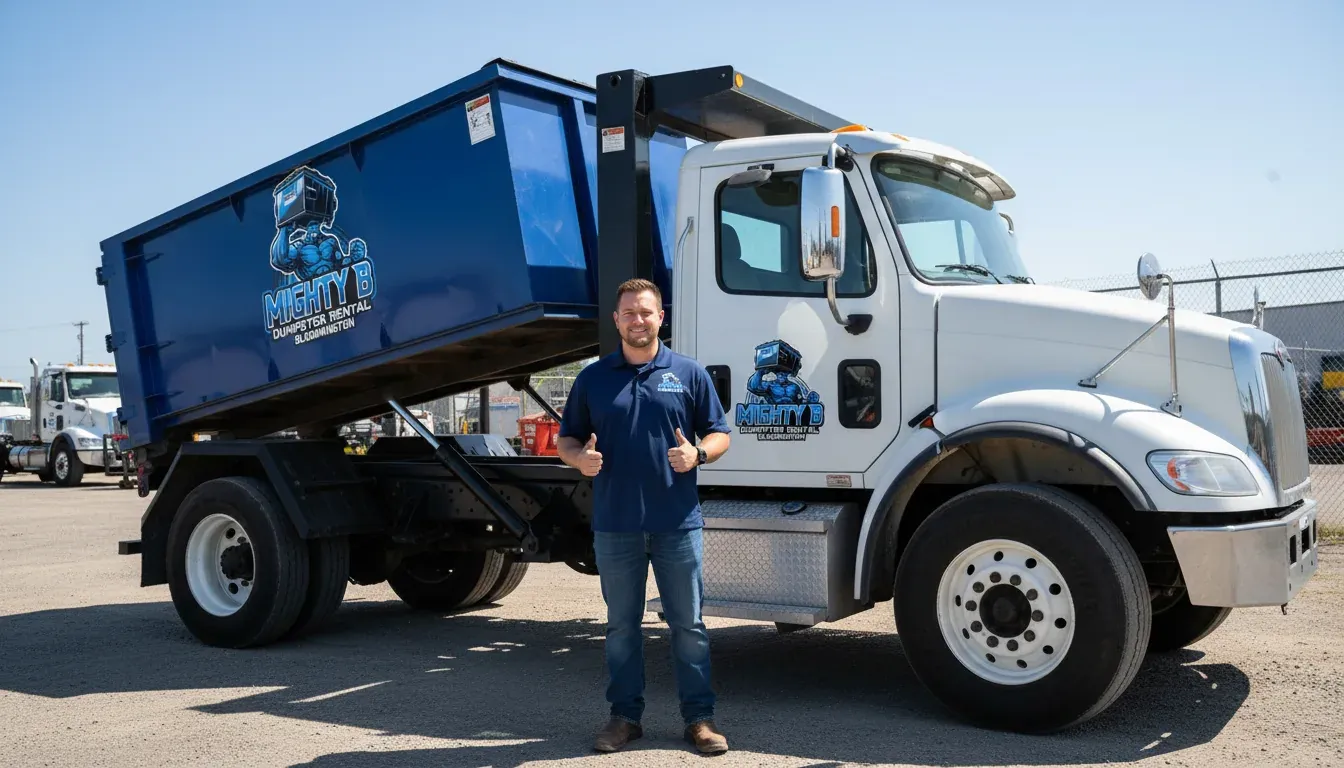
Central Illinois does not have a mild season and three difficult ones. It has four seasons that each break a dumpster rental in their own specific way, and after more than a decade of dropping roll-offs around Bloomington, Normal and the farm towns out past the interstates, we can tell you the calendar month matters almost as much as what you are throwing away.
The same 20 yard container on the same driveway is an easy Tuesday morning in January and a genuine problem in April. Placement, timing, weight, smell and availability all shift with the season. Here is the year as we actually experience it, quarter by quarter.
Spring (March–May): mud season, and the busiest stretch of the year
Spring is when the phone does not stop, and it is also the hardest season to place a container well. Those two facts are related, and both come back to the thaw.
The ground stops being a road
Frost comes out of Central Illinois soil from the top down, and what is left behind is heavy clay with nowhere to drain. Flat prairie ground does not shed water — it holds it. A yard that looked firm in February will swallow a rear tire in March, and the deceptive part is that the surface often looks dry while the six inches underneath are saturated.
So we get fussy about placement in spring in a way that can seem excessive. A full container is many tons on a small footprint, and on soft ground that footprint sinks. March through May we push hard for paved surfaces — the driveway, an apron, a concrete pad behind the shop. Driveway protection boards go under every residential drop as standard, which handles the surface, but no board helps if the base under it is soup.
Gravel lanes out in the county deserve their own warning. A lane that carries grain trucks in October can be a rutted mess in early April after the frost has heaved it and the rain has soaked it. Walk it before you book, and tell us honestly what it is doing — we would far rather stage the container at the road end than sink a truck two hundred feet in.
Spring cleaning, garages and the May student crunch
The work itself is predictable, and there is a lot of it. Garages get emptied for the first time since fall. Basements get sorted, and here that often follows a wet spring and a sump pump that could not keep up — a very different job, with soaked carpet, ruined boxes and swollen particle board. We cover that in the flooded basement cleanout guide, because wet material is heavier than anyone expects.
Then there is early-to-mid May, which is its own event here. ISU and IWU move-out compresses thousands of student households into about ten days, landlords turn units immediately, and demand for containers in Normal and the west and south sides of Bloomington goes vertical. If you own or manage rental property, book that window weeks out, not days. Our student rental turnover guide covers the sequencing.
Spring also opens severe weather season. Late April and May bring the first real cells, and one afternoon of straight-line wind can put more fence, shingle and tree debris on the ground in a single neighborhood than a month of normal work.
Book ahead in spring. Same-day delivery before noon on a weekday is our standard and we hold to it as much as we can, but April and May are the tightest weeks on our calendar. A week of lead time in spring buys you the delivery slot you actually want.
Summer (June–August): peak build season and heat management
Summer is when contractors own the calendar. Roofing, siding, decks, additions, whole-kitchen remodels — everything exterior that was waiting on dry ground. Volume is high but the ground problems mostly disappear, so this becomes a timing and materials season rather than a placement season.
Ask for a morning drop
Asphalt softens on a hot, humid July afternoon. A black asphalt drive that has been baking since ten in the morning is measurably softer at three than it was at seven, and that is exactly when container wheels and rails leave impressions. The fix is free: take the early slot. We deliver and pull in the morning wherever the schedule allows, and in July and August it is worth asking for specifically. More on surfaces in protecting your driveway during dumpster delivery.
Heat, smell and the lid
Nobody plans for this one and everybody meets it. Organic material in a container in ninety-degree humidity goes bad fast — food waste from a kitchen tear-out, wet carpet and pad, anything out of a flooded basement. Two days is enough to make a container genuinely unpleasant for you and every neighbor downwind.
Keep it covered. Close the lid, or throw a tarp over the top and weight the corners. It holds the smell down, keeps rain out and stops material blowing around in a summer wind. Load organics last, right before pickup, rather than first — and if you are pulling wet carpet in August, plan a short rental window instead of stretching the standard seven days.
Long light, and the wind events
The upside of summer is daylight. Nine o'clock evenings let a DIY homeowner put in three usable hours after work every day, which turns a one-weekend job into one that spreads comfortably across a week. That is often the difference between renting one container and rushing to fill two.
The downside is that this is derecho country. A straight-line wind event can flatten trees and strip roofs across half a county in an hour, and the debris is enormous, mixed and immediate. When it happens, capacity across every hauler in the region gets consumed the same afternoon. If your property takes a hit, call early rather than after you have finished stacking — we hold capacity for storm debris cleanup. Roofing has its own weight math, covered in our roofing dumpster rental notes.
Autumn (September–November): harvest, brush and the race to freeze-up
Autumn is the most pleasant season to work in and the most complicated one to schedule in, at least outside the Twin Cities.
Harvest owns the rural roads
From roughly late September into November, the two-lanes out toward Danvers, Colfax, Saybrook and Ellsworth carry combines, grain carts and loaded semis, and those roads are not wide. Our drivers plan around it, but delivery windows in the county get less precise during harvest. Give us a wider window and it goes smoothly.
The other half is simpler: farmers have zero spare time from late September until the crop is in. If you are planning a machine shed or outbuilding cleanout, do it in early September before the combines roll, or wait until harvest is over. Squeezing it into the middle just means the container sits unloaded on your rental clock.
Landscape waste is not a dumpster item in Illinois
This catches people every single fall. Landscape waste — grass, leaves, brush, branches, garden trimmings — has been banned from Illinois landfills since 1990. It is composted, not buried, which means it cannot ride along in a mixed load. A container of drywall and old furniture with a layer of leaves and limbs on top is a contaminated load, and that becomes an expensive problem at the scale.
Plan two streams in autumn. Brush and yard debris go through yard waste removal as their own handling, and municipal leaf and brush programs change year to year, so check current arrangements directly with the City of Bloomington or the Town of Normal. The rest of the cleanout goes in the box.
Beat the freeze
Autumn is the deadline season. Roofs get replaced before shingles are too cold to seal. Gutters get torn off and redone. Decks, fences, siding and concrete all have a hard stop once the ground freezes. And every garage in McLean County gets reclaimed in October and November, for the practical reason that people would like to park inside again before the first ice storm.
If you have an exterior project on the list, October is the month to commit. November works, but you are gambling with the weather, and a half-finished tear-off in a December cold snap is a miserable place to be.
Winter (December–February): the season nobody books, and the best ground of the year
Here is what most homeowners never consider: frozen ground is the best driving surface Central Illinois offers. A yard a truck cannot touch in April will carry a loaded roll-off in January without leaving a mark, because the freeze turns soft clay into something close to pavement. If you have an awkward placement — back yard, side lot, a spot off the drive — deep winter is genuinely your window.
What winter takes away
Snow and ice, and two rules worth knowing. Bloomington and Normal both operate snow routes and declare snow emergencies, which restrict parking on designated streets during and after significant snowfall. A container sitting on a snow route during a declared emergency is an obstruction to a plow. Street placement is a poor idea in winter for that reason alone — get it on the driveway or a pad, and confirm snow route rules and any permit requirements with the city or town directly.
Prepare the placement area before we arrive. Clear the snow down to the surface where the container will sit, salt or sand it, and clear a path for the truck. Ice under a container turns a routine pickup into a rescheduled trip. Keep the area clear during the rental, too.
Weight is the hidden winter cost
An open container is a bucket. Snow, then a thaw, then rain, then a refreeze — and you are hauling several hundred pounds of water you never put in there. On a job already close to its weight allowance, that is the difference between staying inside the flat rate and going past it. Tarp the top, or at least knock the snow out before pickup day.
Winter's real advantage
Everything indoors. Basement finishing and basement cleanouts, bathroom gut jobs, attic clearing, kitchen remodels, decluttering, estate work — none of it cares what the weather is doing. And because so few people think to schedule a dumpster in January, availability is the best it will be all year. A 20 yard container is the common fit for interior remodel work, though the plaster-and-lath walls in the pre-1940 housing stock west and south of downtown change that math, since plaster runs two to three times the weight of modern drywall.
The year at a glance
| Season | Best projects | Placement risk | Booking lead time |
|---|---|---|---|
| Spring (Mar–May) | Spring cleaning, garage clearouts, basement water damage, rental turnover, early storm debris | Highest. Thawed clay, soft lawns, rutted gravel lanes. Paved surfaces only in most cases | 1–2 weeks. Busiest stretch of the year, and May is the tightest week of it |
| Summer (Jun–Aug) | Roofing, siding, decks, additions, full remodels, exterior demolition | Moderate. Asphalt softens on hot afternoons — take the morning slot | 3–7 days normally; immediate and scarce after a wind or hail event |
| Autumn (Sep–Nov) | Pre-winter roof and gutter work, garage reclamation, last exterior projects, cleanouts | Low in town. Rural delivery windows widen during harvest traffic | 3–7 days; allow extra for county addresses through harvest |
| Winter (Dec–Feb) | Basements, bathrooms, attics, kitchens, estate cleanouts — anything indoors | Lowest ground risk. Frozen ground drives well, but snow routes rule out street placement | 1–3 days. Quietest season, best availability, easiest to get same-day |
What does not change with the season
The banned-material list reads the same in January as in July. Electronics are banned from Illinois landfills under the state's electronics recycling law — TVs, monitors, computers, printers and peripherals get recycled separately. Landscape waste has its own long-standing ban. Whole tires, lead-acid batteries, used oil and filters, liquids, wet paint, solvents, propane tanks and asbestos-containing material are all out, and any appliance holding refrigerant needs professional recovery first. Latex paint only rides along once it is fully dried out with the lid off.
For anything you are unsure about in McLean County, the Ecology Action Center in Normal is the local hub for recycling and household hazardous waste information. When in doubt, ask us before it goes in the box — sorting it out on the driveway is easy, sorting it out at the scale is not.
Whatever month it is, we can tell you how the season affects your job. Call Mighty B Dumpster Rental Bloomington at (309) 503-0748, describe the project and where you want the container to sit, and we will tell you straight whether the placement works right now, what size fits, and how much lead time this particular week needs. Flat-rate pricing, a 7-day standard rental you can extend, driveway protection boards on every residential drop, and same-day delivery if you call before noon on a weekday. You can also reach us through our contact page.
Need a container in Bloomington or anywhere in McLean County? Call (309) 503-0748 and describe the job. We will name the size, the flat rate and a delivery slot — often the same day. No forms, no waiting on an email.